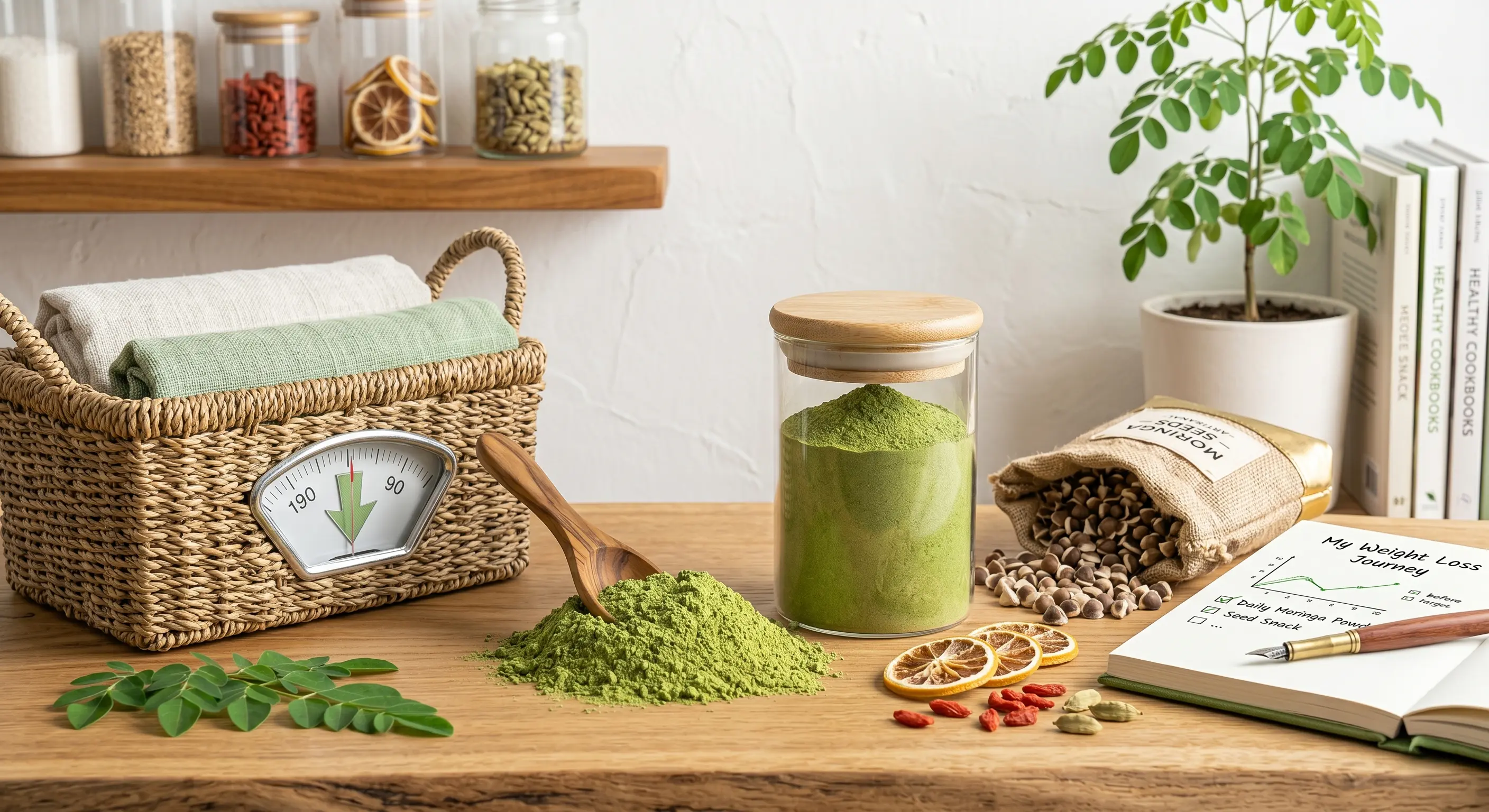
Weight management is overwhelmingly a story of sustained caloric balance, resistance training, sleep quality, stress regulation, and adherence to a food pattern you can keep. Moringa may appear in discussions because animal and small human studies probe metabolic markers—glucose, lipids, inflammation proxies—not because a scoop dissolves adipose tissue overnight. Framing Moringa as a supportive micronutrient source within a higher-protein, higher-fiber diet is honest; framing it as a fat incinerator is not.
Why this topic matters in the 2026 market
In retail and wellness media, interest in botanical teas and “daily ritual” products remains high entering 2026—while regulators and educated consumers keep pressing for truthful claims and verifiable quality. That balance affects everyone from small growers to global importers.
This guide frames Moringa for Weight Loss with American buyer context first (Amazon.com retail benchmarks and bulk RFQs many readers run from the USA), India export mechanics second, and other regions third—without hype that fails regulatory or B2B scrutiny.
Who this guide serves, by role
Use the sections below as a checklist for decisions that sync with how Moringa actually moves through Indian supply chains and international trade.
🧑🌾 Farmers / Producers
If you grow Moringa for leaf or drumstick, culinary and tea-cut markets reward clean drying and consistent leaf size. Buyers for beverage blends care about ash, fiber feel, and whether leaves were shade-dried versus sun-baked.
Local sales of dried leaf for home steeping can complement export lanes when you document moisture and keep metal-out equipment on the milling line.
🏭 Manufacturers
Tea SKUs need allergen segregation, honest flavor claims, and stable microbiology on blended botanicals. Powder inclusions change dispersion; tea-bag fill weights must match label declarations.
Lot-level COAs and retain samples protect you if a retailer questions a sensory shift between harvests.
🚢 Exporters / Importers
Even consumer-oriented ingredients move through B2B specifications: destination microbiological limits, pesticide MRLs, and organic integrity across handlers. Dual-language labels and compliant health-copy reduce border delays.
Importer due diligence on moringa suppliers in India should match the same rigor as industrial powder purchases—especially for blended SKUs.
🛒 Buyers / Wholesale buyers
Cafés, D2C tea brands, and supplement makers should request pilot lots, steeping protocols from the supplier, and clear shelf-life assumptions. MOQ and lead time drive working capital; blended SKUs multiply component risk.
Compare quotes against published EU or FDA-aligned specs even when the sale looks “small.”
💼 Business investors
Functional beverage and botanical tea categories remain crowded in 2026; differentiation comes from traceability stories, third-party testing cadence, and margin after influencer spend—not from generic “detox” packaging alone.
Model scenarios with realistic return rates, compliance retests, and ingredient inflation in ginger, tulsi, or organic citrus peel inputs.
Mechanistic curiosity versus lifestyle leverage
Polyphenols and isothiocyanate-related chemistry fuel mechanistic excitement in cells. Human translation is modest and heterogeneous. If you add Moringa while keeping ultra-processed snacks constant, do not expect scale miracles. If you add Moringa while improving protein distribution across meals, walking after lunch, and fixing sleep, the signal you feel may be mostly from those anchors—with Moringa as a plausible minor contributor.
Appetite, fiber, and satiety
Leaf fiber can increase meal viscosity slightly when stirred into yogurt or dal, potentially influencing satiety signals for some people. Capsules contribute less fiber per serving. Neither replaces vegetables’ bulk. Hydration matters: high-fiber stacks without water worsen bloating.
Glucose stability and craving loops
Post-meal glucose swings drive subjective cravings for some individuals. Moringa research includes glycemic endpoints; clinical use still belongs with physicians. If you track CGM data, change one variable at a time. See diabetes context for disclaimers.
Exercise timing and marketing mythology
“Detox sweat” claims are nonsense. Moringa will not replace protein for muscle repair. Pair resistance training with adequate leucine-rich foods. If pre-workout jitters come from stacked stimulants, audit your whole morning—not just the green powder.
What to log for ninety days
- Weight trend (weekly averages, not daily noise).
- Waist circumference monthly.
- Steps or resistance sessions.
- Sleep hours subjective quality.
- Moringa dose format (powder vs capsule) for correlation.
Amazon products that fit habits, not fantasies
Powders for smoothies, teas for ritual, capsules for travel—choose adherence. Cross-read powder vs capsules and product guides.
When to escalate medically
Rapid unintentional weight loss, endocrine symptoms, or mood shifts deserve clinics, not supplement tweaks. This article is education, not a plan of care.
Closing
Respect the basics; treat Moringa as a possible small ally inside a serious structure.
Keep reading in this topic cluster
Three to five internal jumps—same silo, different job-to-be-done. (Site map rule: every article links deeper into its cluster plus one conversion path.)
Business intelligence snapshot (2026)
Functional tea and botanical blends continue to pull shelf space from sugary drinks in many markets, but promotion sensitivity—especially around “detox” wording—has tightened. Retailers ask for substantiation files even when suppliers are small.
India remains a competitive origin for dried leaf and powder when moisture, microbiology, and metals are controlled; EU and North American buyers increasingly expect digital COAs, QR traceability pilots, or blockchain-adjacent provenance proofs on mid-tier SKUs, not only premium lines.
Watch input costs on companion botanicals (ginger, tulsi, citrus peel) and glassine or compostable tea-bag materials—these lines often swing gross margin more than nominal Moringa leaf price moves.
Frequently asked questions
Is India still a competitive origin for Moringa in 2026?
Yes when quality documentation matches price—buyers compare India with alternate origins on micro, metals, pesticide policy, and logistics reliability, not headline FOB alone.
What is the fastest way to vet a new supplier?
Ask for a lot-specific COA tied to the exact pack line, confirm retest policy on arrival, and where possible audit drying and milling in person or via structured video.
How should brands talk about health benefits responsibly?
Stay within structure/function guardrails for your market, cite realistic serving sizes, and route disease claims to qualified professionals—this protects both compliance and consumer trust.
Where do margins usually leak for new exporters?
Moisture disputes, sample-to-PO mismatch, FX timing, informal rework labour, and rejected micro on arrival—model these explicitly, not optimistically.
More on Moringa (editorial hub)
Continue with our Moringa encyclopedia, safety & interactions guide, and pure vs adulterated powder checklist. Importing or vetting moringa suppliers in India? Start at the home buyer guide and bulk buyer checklist.
Last updated: May 2026.
Compare on Amazon
Amazon runs checkout, returns, and pricing. Re-check the listing title and organic seal before you order.
Prices and Prime eligibility can change without notice.